Junior City Council visits planned state-of-the-art Faure New Water Scheme site
03 September 2024
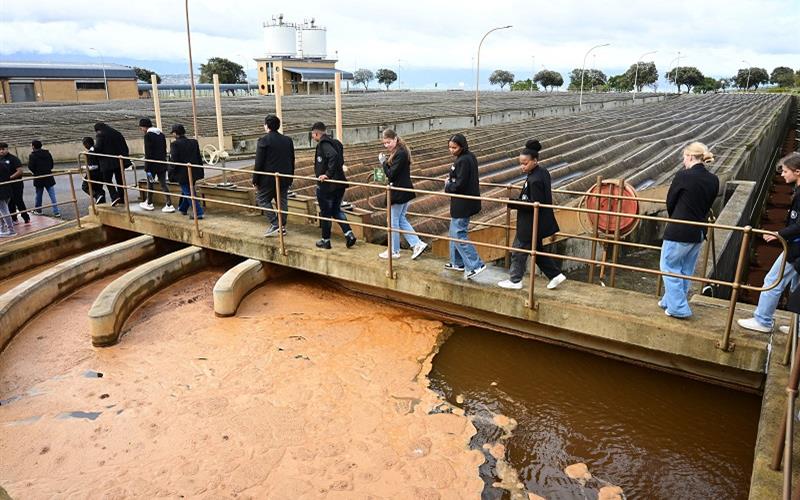
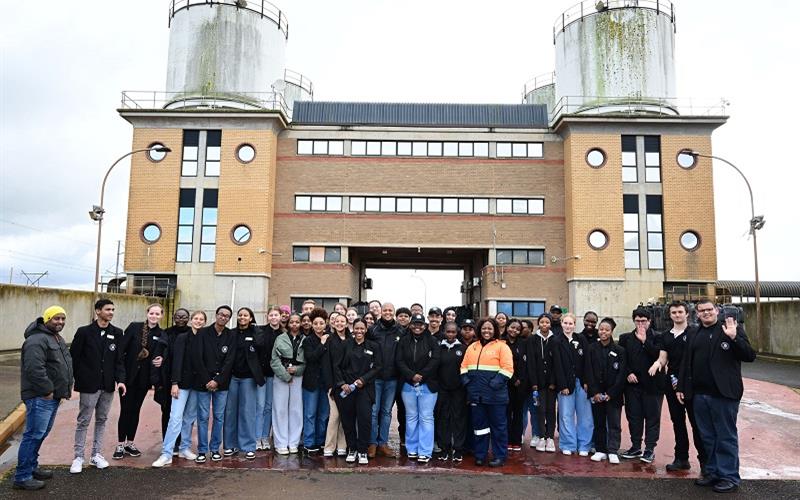
The Executive Committee of the City of Cape Town’s Junior City Council (JCC) recently visited the Faure Water Treatment Plant (WTP), which will host the City’s Faure New Water Scheme to drive water reuse and augment the water supply.
During their visit, the JCC members received a behind-the-scenes look at the water treatment process – from the origin of the water to the chemical and mechanical processes it undergoes to become high-quality drinking water. The visit included a leadership masterclass by Nosisa Nqayi, a bulk water scheme manager, who shared insights into her role and career journey.
City's water reuse plans
The Faure WTP is a key facility in the City's broader New Water Programme. The Faure New Water Scheme, to be constructed at the Faure WTP, will eventually increase and diversify the City's drinking water supply by 70 to 100 million litres per day.
The scheme will use sophisticated technology to purify high-quality treated effluent from the recently upgraded Zandvliet Wastewater Treatment Works (WWTW). The treated wastewater will undergo a multi-barrier purification process to meet safe drinking water standards before being blended with dam water and treated again at the Faure WTP to supply the City's water network.
Feedback from the junior councillors:
Junior Councillor Yanga Sandi: 'My biggest fear is having to experience Day Zero again as a result of lack of community buy-in or enthusiasm in the NWP specifically when it comes to water reuse – especially because the water would taste the same as we are drinking at the moment.'
Junior Councillor Liam McGregor: 'I enjoyed the site visit and gave it a solid 5/5! The infrastructure was fascinating and the staff were very professional. I learned how water is treated at the plant, which I had no idea was such a long process. The masterclass presenter was really engaging and I found her passion for her work to be inspiring.
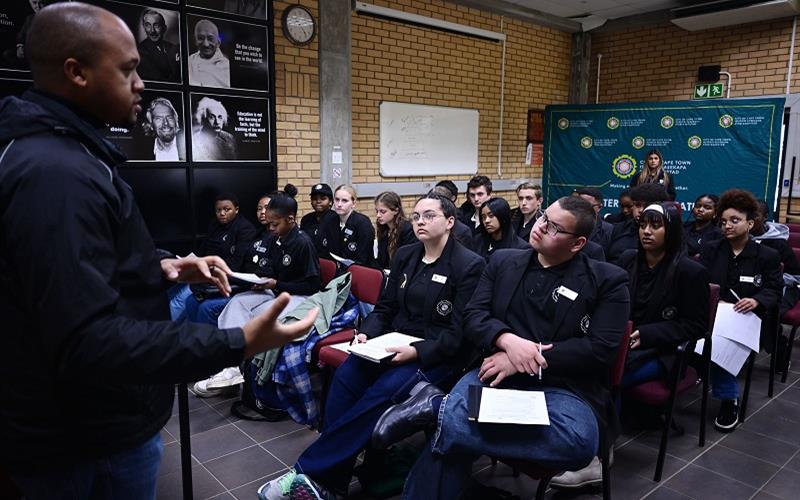
Junior Councillor Sithasoxolo Matoni: 'It was impressive to see the technology they used and our facilitator was amazing. I learned that Cape Town's water system is ranked first nationally, which made me really proud. The masterclass was equally engaging and I loved how the presenter connected personal passion with leadership.'
'I am glad the JCC members enjoyed their experience at Faure WTP, which will play a significant role in the water reuse project as part of the City's New Water Programme. This plan aims to secure a resilient water future for residents, considering climate change and unpredictable rainfall. Alongside water reuse, the programme includes desalination and groundwater schemes, aiming to increase the supply by 300 million litres per day by 2030,' said the City's Mayoral Committee Member for Water and Sanitation, Councillor Zahid Badroodien.
'This visit was crucial for the JCC. They've shown a strong interest in the City's water resilience plans. Engaging with officials on the day was encouraging. Water resilience needs bold conversations, actions, and the support of future leaders. These Junior Councillors are the future leaders of the City's water resilience efforts,' said Councillor Donovan Nelson, the custodian of the City's JCC.
About the Junior City Council
The Junior City Council is an initiative run by the City which aims to expose high school students in Cape Town to the workings of the City Council. The JCC consists of 50 dynamic youth in grades 10 and 11. The one year non-political programme aims to foster a sense of civic responsibility among the youth and to develop young people's skills and self-image so that they can become confident in their abilities to bring about change in their respective communities.
The City's New Water Programme includes:
- Water Re-use: Implementing purified recycled wastewater, adding 70 million to 100 million litres a day.
- Desalination: Extracting salt from seawater to yield 50 million to 70 million litres a day.
- Clearing of invasive plant species and various management interventions: Harnessing water from rivers to contribute an additional 30 million litres a day.
- Groundwater: Drilling boreholes and tapping springs securing over 100 million litres a day.
End
Published by:
City of Cape Town, Media Office